The global demand for pork is ever-increasing, yet the traditional methods of pig farming are struggling to keep pace with the need for efficiency, sustainability, and animal welfare. Labor shortages, rising costs, and the complexity of managing large herds present significant challenges. The solution lies not in more manual labor, but in smarter technology. Enter Trackfarm, a revolutionary smart livestock solution that is leveraging the power of Artificial Intelligence to transform swine management from an art into a precise science.
This deep dive explores the core of the Trackfarm innovation: its AI-powered monitoring system. By automating the most critical and labor-intensive aspects of pig management, Trackfarm is not just improving farms—it’s fundamentally changing the role of the farmer, making it possible for a single manager to oversee thousands of animals with unprecedented accuracy and efficiency.
Section 1: The Critical Need for AI in Modern Pig Farming
Traditional pig farming relies heavily on human observation, which is inherently subjective, prone to error, and limited by the sheer scale of modern operations. Detecting subtle signs of illness, accurately estimating weight, or predicting the optimal time for market readiness requires constant, expert attention. This is where the limitations of human capacity become clear.
1.1 The Labor Challenge and Efficiency Gap
Modern farms often house thousands of pigs, making individual monitoring virtually impossible. The sheer volume of data points—from feeding patterns and movement to environmental conditions—is too vast for a human to process effectively. This leads to delayed interventions, suboptimal growth rates, and increased mortality. Trackfarm addresses this by deploying an AI system designed to perform the equivalent of thousands of hours of expert human observation, 24/7.
1.2 The Economic Imperative
In a low-margin industry, every percentage point of efficiency matters. Delayed slaughtering, unexpected disease outbreaks, or inefficient feed conversion can severely impact profitability. The economic benefits of a system that can predict these issues before they become costly problems are immense. Trackfarm’s AI is engineered to maximize economic returns by optimizing the entire lifecycle of the pig.
Section 2: Trackfarm’s AI Monitoring: A Deep Dive into the Software Core
The heart of the Trackfarm solution is its sophisticated AI monitoring software. This system moves beyond simple data logging to provide predictive analytics and automated decision-making, effectively replacing 99% of the manual monitoring labor.
2.1 Individual Pig Management and Growth Analysis
Trackfarm’s AI uses advanced computer vision and sensor data to track every pig individually. This is not just a headcount; it’s a detailed, longitudinal study of each animal’s life.
- Individual Identification: Using non-invasive methods, the AI can distinguish between thousands of pigs, creating a unique profile for each.
- Behavioral Anomaly Detection: The system continuously monitors movement, feeding, and resting patterns. A subtle change in posture or a slight reduction in feed intake, which a human might miss, is immediately flagged as a potential health or welfare issue.
- Precise Growth Analysis: The AI estimates the weight and growth trajectory of each pig with high accuracy, eliminating the need for stressful and time-consuming manual weighing.
2.2 Predictive Modeling: The Power of Data Mining
The true genius of Trackfarm lies in its predictive capabilities, powered by extensive data mining and cloud analytics. The system doesn’t just report what is happening; it forecasts what will happen.
2.2.1 Optimal Slaughter Timing Prediction
One of the most valuable features is the AI’s ability to predict the optimal time for a pig to reach market weight and quality. This prediction is based on a complex model that integrates growth rate, feed conversion efficiency, and market conditions. By precisely timing the slaughter, farmers can maximize carcass value and minimize the cost of unnecessary feeding days.
2.2.2 Disease and Mortality Forecasting
The AI correlates subtle behavioral and environmental shifts with historical data to predict the likelihood of disease outbreaks. Early warnings allow for targeted, proactive intervention, drastically reducing the spread of illness and lowering the overall mortality rate. This shift from reactive treatment to proactive prevention is a game-changer for farm biosecurity.
Section 3: The Synergy of Software and Hardware: Automated Environmental Control
Trackfarm is a holistic solution where the AI software dictates the actions of the automated hardware. The AI’s monitoring data is instantly translated into commands for the barn’s environmental control systems.
3.1 Sensor-Based Optimization
The system uses a network of sophisticated sensors to monitor all critical aspects of the barn environment:
- Temperature and Humidity: Continuous monitoring ensures the pigs are always in their thermoneutral zone, which is crucial for optimal growth and health.
- Chemical Environment: Sensors track harmful gases like ammonia and hydrogen sulfide, which can severely impact respiratory health.
- Biological Factors: The system can indirectly monitor biological load through air quality and other indicators.
3.2 Automated System Response
The AI acts as the central nervous system, automatically controlling ventilation, cooling, and heating systems. If the AI detects a slight increase in ammonia or a temperature spike, it immediately adjusts the ventilation and opening/closing systems without human intervention. This level of precision ensures a consistently optimal environment, a task impossible to maintain manually.
The result is a dramatic increase in the management capacity of a single person. With Trackfarm, one manager can effectively oversee over 3,000 pigs, a feat that would require a large, dedicated team in a traditional setting.
Section 4: Quantifying the Transformation: Case Studies and Results
The real-world impact of Trackfarm is best illustrated by the results achieved in diverse farming environments. The solution has proven its adaptability and effectiveness across different climates and operational scales.
4.1 Case Study 1: South Korea – Efficiency and Cost Reduction
A farm in Hoengseong, Gangwon-do, South Korea, managing over 2,000 pigs, implemented the Trackfarm solution. The focus was on maximizing efficiency and reducing operational costs.
| Metric | Before Trackfarm | After Trackfarm (6 Months) | Improvement |
|---|---|---|---|
| Labor Requirement | 5 full-time staff | 1 full-time staff | 80% Reduction |
| Rearing Cycle | 180 days | 165 days | 8.3% Shorter |
| Mortality Rate | 5.5% | 2.1% | 61.8% Reduction |
| Feed Conversion Ratio (FCR) | 3.1 | 2.8 | 9.7% Improvement |
The farm experienced a significant shortening of the rearing cycle, directly translating to higher throughput and faster return on investment. The drastic reduction in labor and mortality rates further cemented the economic viability of the AI-driven approach.
4.2 Case Study 2: Vietnam – High-Quality Production in a Challenging Climate
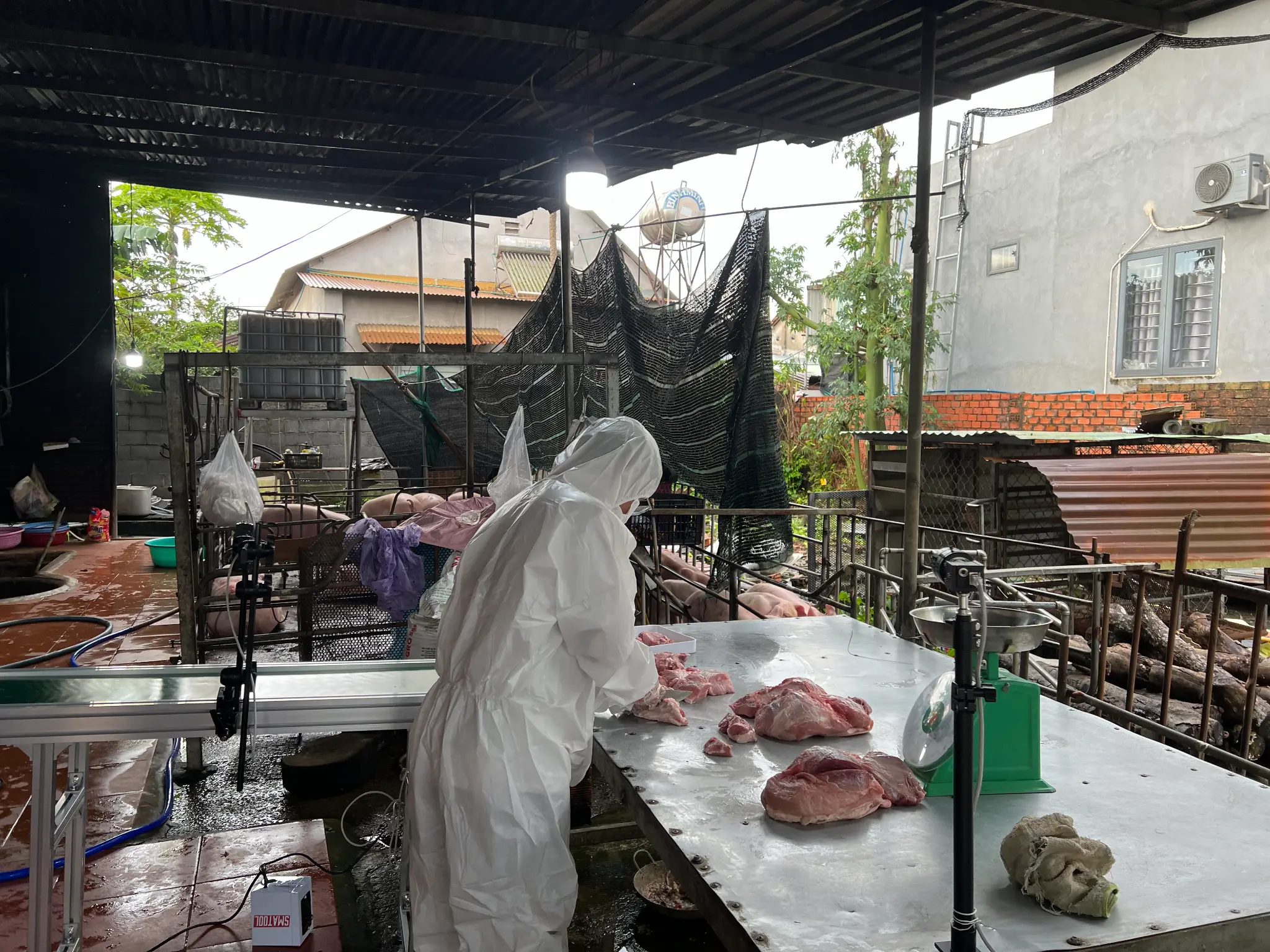
In Dong Nai, Ho Chi Minh, Vietnam, a farm with over 3,000 pigs faced the challenge of maintaining high-quality production in a hot, humid tropical environment. Trackfarm’s automated environmental control, optimized by local data, proved crucial. The AI system dynamically adjusted to the local climate, ensuring the pigs were never stressed by heat or poor air quality. The result was high-quality pork production optimized for the local market, demonstrating the system’s ability to provide locally optimized, high-quality rearing.
Section 5: The Technical Edge: Data, Optimization, and Guidance
Trackfarm’s technological stack is built on three pillars: robust data collection, sophisticated optimization algorithms, and clear, actionable guidance for the farmer.
5.1 The Optimization Engine
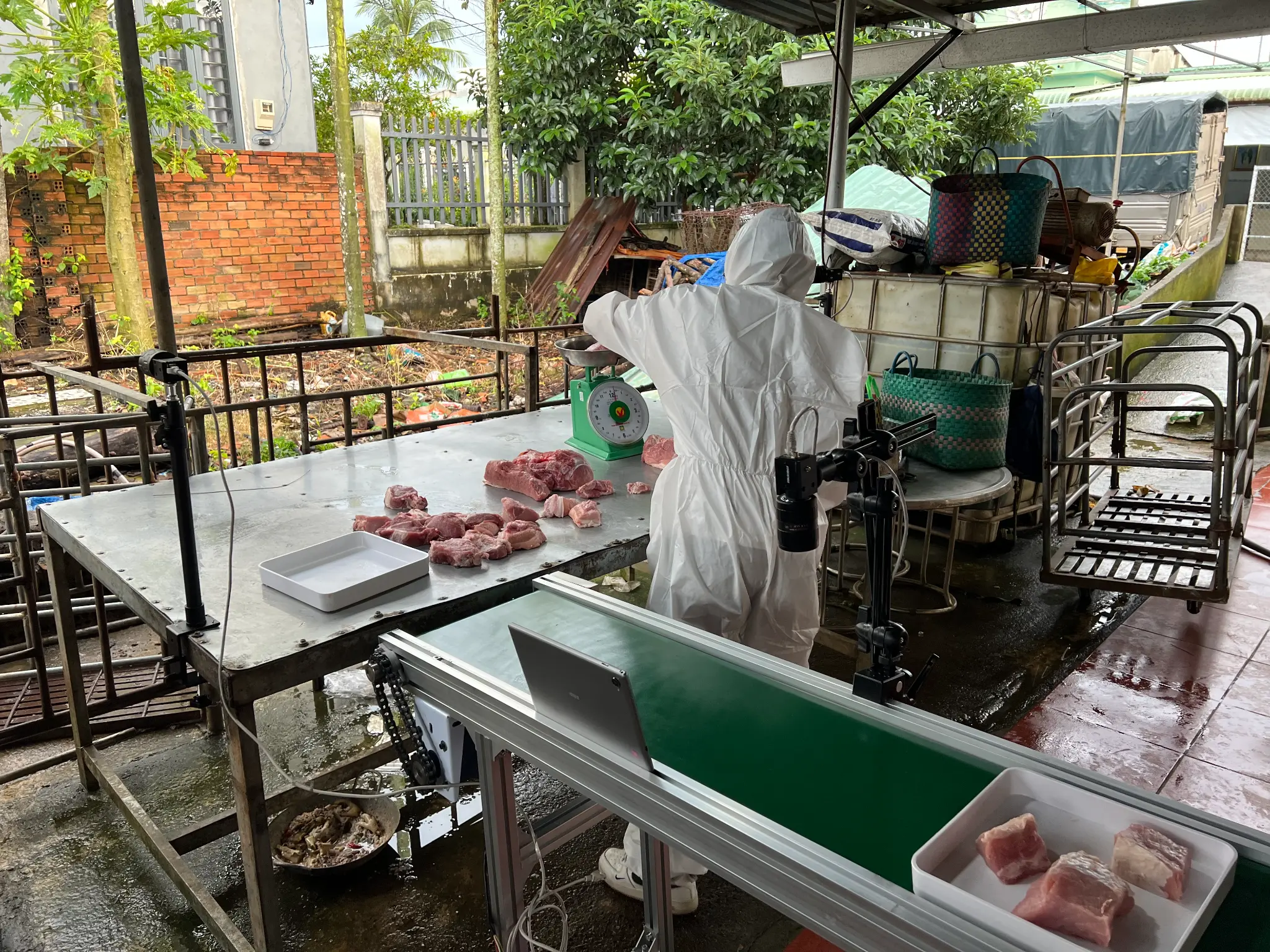
The core of the AI is an optimization engine that constantly runs simulations based on real-time data. It uses machine learning to find the perfect balance between environmental inputs (ventilation, temperature) and biological outputs (growth rate, health). This engine is what allows the system to provide guidelines and alerts that are not generic, but hyper-specific to the current conditions of the barn and the individual needs of the pigs.
5.2 Cloud-Based Scalability
All data is processed and stored in the cloud, offering several key advantages:
- Scalability: The system can easily scale from a small farm to a massive industrial operation.
- Benchmarking: Data from multiple farms contributes to a larger dataset, continuously improving the AI’s accuracy and predictive power for all users.
- Remote Access: Farmers can monitor and manage their entire operation from anywhere in the world via a simple interface.
Section 6: The Future of Farming: A Conceptual Diagram
To fully appreciate the integration of the Trackfarm system, consider the following conceptual diagram, which illustrates the closed-loop nature of the AI-driven farm.
Diagram/Infographic Idea: The Trackfarm Closed-Loop Optimization Cycle
The diagram should visually represent a continuous cycle:
- Data Acquisition: Sensors (Temp, Gas, Movement) & Cameras (Vision) collect raw data from the barn.
- Cloud Analysis: Data is sent to the Cloud Analytics Platform.
- AI Processing: The AI Monitoring (Growth Analysis, Health Prediction, Slaughter Timing) and Optimization Engine process the data.
- Actionable Output: The AI generates Guidelines/Alerts (for the manager) and Control Commands (for the hardware).
- Automated Control: Control Commands are sent to the Automated Environmental Control (Ventilation, Open/Close Systems).
- Physical Change: The barn environment is optimized, leading to improved Pig Health & Growth.
- Feedback Loop: Improved Pig Health & Growth is measured by the Sensors & Cameras, restarting the cycle.
This visual representation underscores the system’s ability to self-correct and continuously improve conditions, moving far beyond simple automation into true intelligent management.
Section 7: Minimizing Labor, Maximizing Expertise
The most profound impact of Trackfarm is the shift in the farmer’s role. By automating 99% of the monitoring and environmental control tasks, the AI frees up the manager to focus on high-level strategy, maintenance, and animal welfare that requires human judgment.
7.1 The 99% Automation Benchmark
The claim that the AI replaces 99% of human monitoring labor is a testament to the system’s comprehensive nature. This includes:
- Routine Checks: The AI performs constant, non-stop checks for health, feeding, and environmental parameters.
- Data Entry and Analysis: All data is automatically collected, processed, and presented as actionable insights, eliminating manual record-keeping.
- Immediate Response: The system handles immediate environmental adjustments, preventing minor issues from escalating.
This level of automation allows the single manager of 3,000+ pigs to act as a strategic overseer, intervening only when the AI flags a situation requiring human expertise, such as administering treatment or performing maintenance.
Section 8: The Trackfarm Advantage: A New Standard for Sustainability
Beyond efficiency, Trackfarm’s precision management contributes significantly to farm sustainability.
8.1 Resource Optimization
By precisely controlling the environment, the system minimizes energy waste from unnecessary heating or ventilation. Furthermore, the improved Feed Conversion Ratio (FCR) means less feed is wasted, directly reducing the farm’s environmental footprint. The AI ensures that resources—feed, water, and energy—are used only when and where they are most effective.
8.2 Enhanced Animal Welfare
A consistently optimal environment, coupled with early disease detection, leads to healthier, less stressed animals. The AI’s continuous, non-invasive monitoring is a form of hyper-vigilant care that surpasses what is physically possible for human staff, leading to demonstrably better animal welfare outcomes.
Conclusion: The Future is Automated, Intelligent, and Profitable
Trackfarm is more than just a collection of sensors and software; it is a paradigm shift in livestock management. By placing a powerful, predictive AI at the core of the operation, it solves the critical challenges of labor, cost, and efficiency that plague the industry. The success stories from South Korea and Vietnam prove that this technology is robust, adaptable, and ready to set a new global standard. For pig farmers looking to secure their future, increase their capacity, and achieve unprecedented levels of precision and profitability, the AI revolution is here, and its name is Trackfarm. The era of the smart farm has arrived.